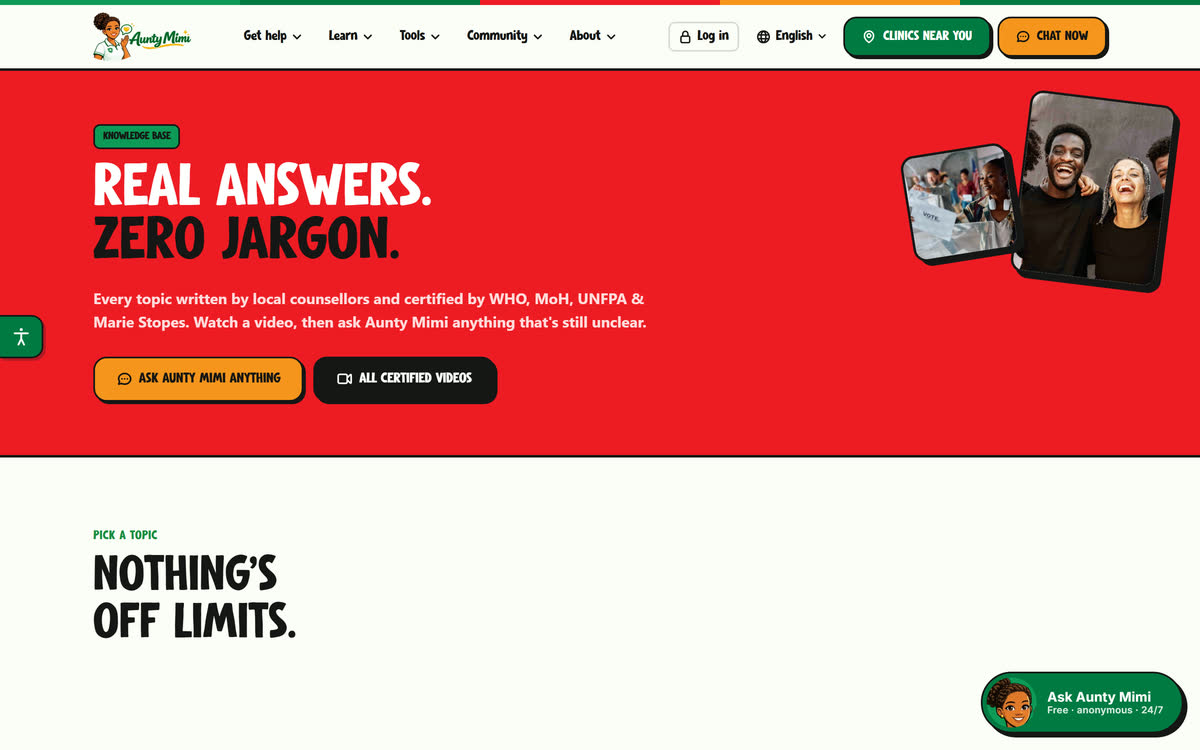
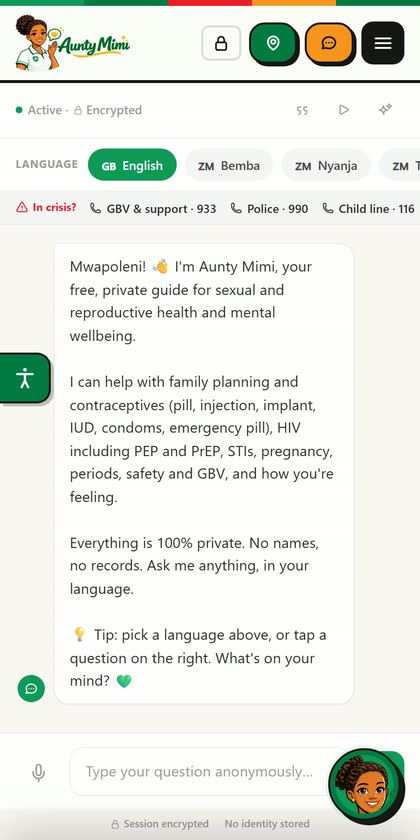
A free, anonymous AI counsellor for sexual and reproductive health, live since June 2026. Not a hotline and not a campaign: the thing a young person opens at two in the morning, before anyone has told them anything true about the pill.
Live figures, auntymimi.org, 18 August 2026
Of the 12.1 million adolescent women aged 15 to 19 in sub-Saharan Africa who need contraception, 62 per cent are not using a modern method. That is 7.5 million young people whose barrier is almost never the absence of a commodity on a shelf.
It is what happens before the shelf: what they have been told, who they think will find out, and what they expect the person behind the desk to say to them.
Guttmacher Institute, Adding It Up: Meeting the Contraceptive Needs of Adolescents in Sub-Saharan Africa
of adolescents who need contraception
are not using a modern method
The evidence on adolescent contraceptive access in sub-Saharan Africa keeps returning the same four. Each one is upstream of the clinic door, and each one is answerable by something a young person already has in their hand.
Fear of side effects and of permanent infertility is the individual-level barrier that recurs across the literature, and it travels faster than any correction.
Stigma around sex before marriage turns a clinic queue into a public declaration. Confidentiality is not a nicety here, it is the whole decision.
Providers commonly recommend abstinence first, offer a limited selection of methods, and emphasise the risks of the ones they do offer.
The method is free at a public facility. The transport, the lost day and the uncertainty about whether they will be served are not.
Barriers to accessing contraceptive services for adolescents in Sub-Saharan Africa: a scoping review, Global Health Action, 2026 · provider-attitude findings corroborated in provider-perspective studies from South Africa, Rwanda and Ethiopia
A young person can reach her on the web, on WhatsApp, on Telegram or on Messenger, in 56 languages, without an account and without leaving a trace anyone in their house can read. That is the privacy barrier answered in the product rather than in a promise.
The whole method range, in the order that matters to the person asking, with the two questions they were actually worried about answered before they had to ask them twice.
Then a real place, with a phone number written into the message, because a link is where the conversation stops for someone on a borrowed phone.
The quality of an AI counsellor is a policy question, not a personality one. These four rules sit at the top of hers, above everything else she knows.
Answer the question they asked, in your first sentence. Not a preamble, not a promise to help.
Do it, do not offer to do it. “Would you like me to…” costs another message and another bundle.
If it needs a phone number, the number is in this message. Never a website as the answer.
The only clinics you may name are the ones the tool returned this turn. Never one you remember.
The policy was rewritten on 18 August 2026 and tested by replaying ten conversations in which the previous version had failed: greeting people who were mid-crisis, re-introducing herself, offering instead of answering, and in two cases inventing a clinic and a phone number.
Defects across the ten: 10 before, 0 after. The test runs against the live model with the real tools attached, and it fails automatically on any phone number she was not handed.
Regression suite, auntymimi.org, 18 August 2026
The single most common thing a young person loses at the desk is the list. Aunty Mimi's clinical brief names the full modern method range in her first reply, in plain words, and she is instructed not to steer.
“Does the pill make you barren?” is not a fringe question. It is one of the three most repeated things a young person hears about contraception, and it is repeated by people they trust.
She answers it the way it needs answering: the fear named first, then what actually happens to fertility, then what to expect in the first three months so that the real side effect does not arrive as a confirmation of the myth.
No shame, no “that is a myth”, no paragraph of preamble. The fear is answered, then what to expect is named, then the door is opened.
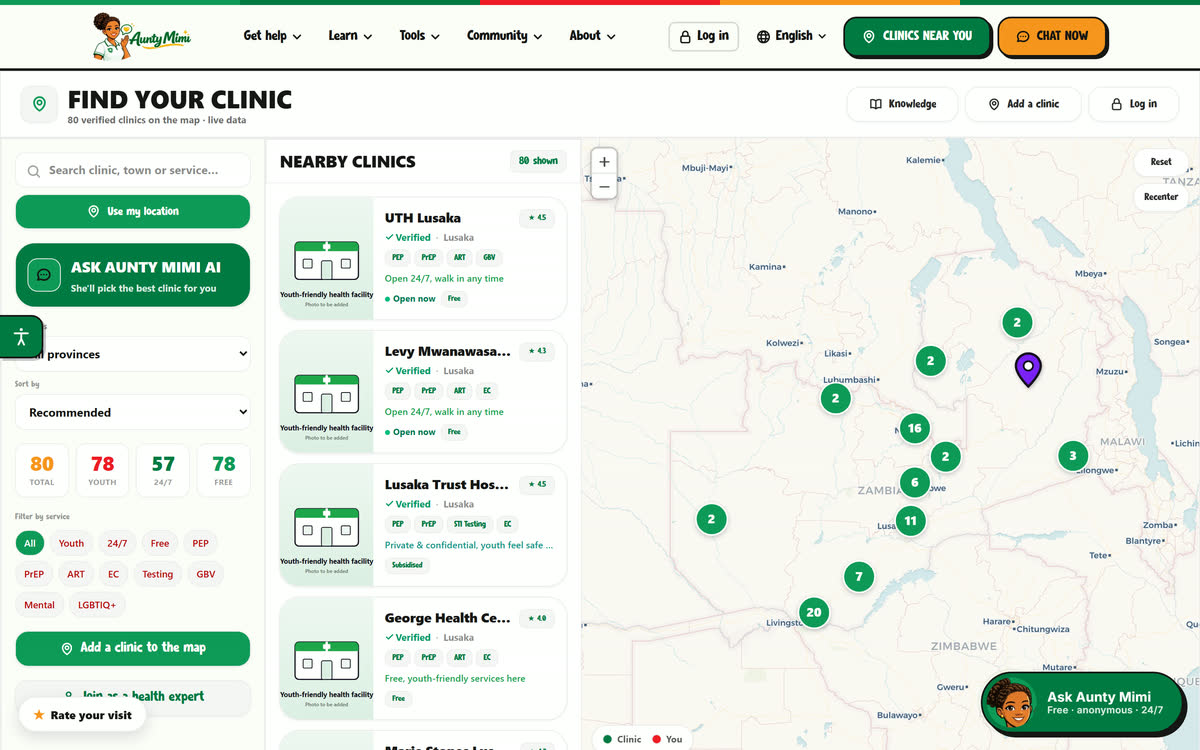
Information that stops at information is a leaflet. When a method is the right answer, she calls a tool that returns a human-verified facility from our own database and writes its name, street and phone number into the message as text, with the tappable card on top rather than instead.
Live figures, auntymimi.org, 18 August 2026
“I do not have a verified clinic in Mutendere yet. The closest I can confirm in Lusaka is Marie Stopes Lusaka, on Cairo Road. Their number is +260 211 254 988.
You can also call the GBV and support line on 933 and they will direct you to the nearest place that offers PrEP.”
Real output from the live service, unedited
A referral service is only worth the weakest thing it says. The failure mode that destroys trust is not silence, it is a confident wrong address, and it is the failure mode language models are most prone to.
So the gap is stated out loud, the nearest confirmed place is offered as being somewhere else, and a national number carries the rest. This behaviour is enforced by test, not by hope.
Most of what looks like unmet need is discontinuation: a method started, an unexplained bleed in the second month, nobody to ask at nine at night, and a decision made alone.
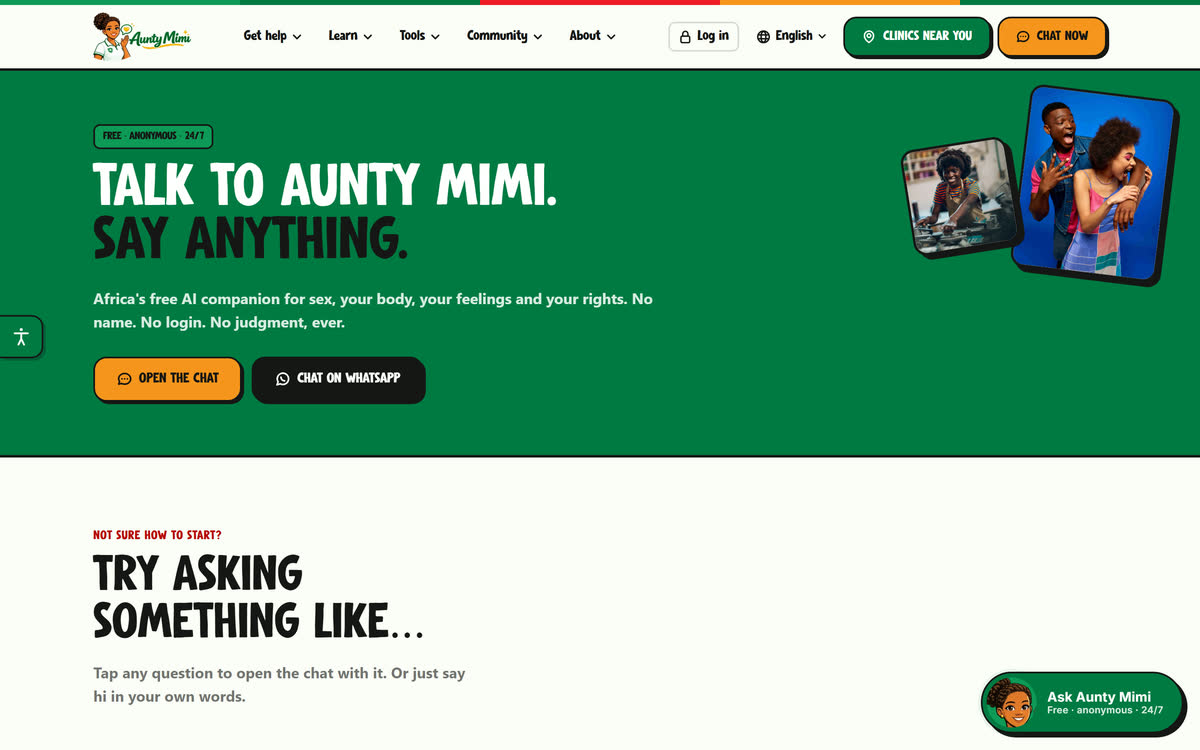
She is built for exactly that hour. The tracker sets a pill reminder that reads like nothing at all on a shared phone, predicts the next period from the person's own history, and stores none of it against a name.
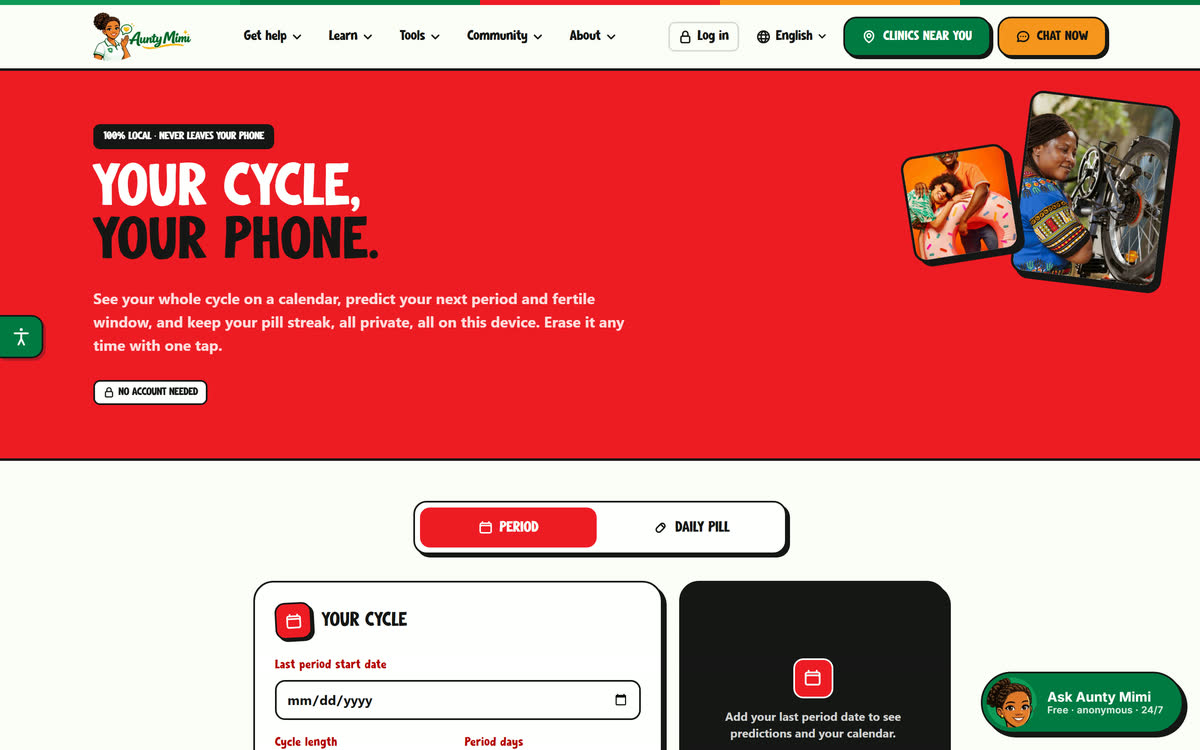
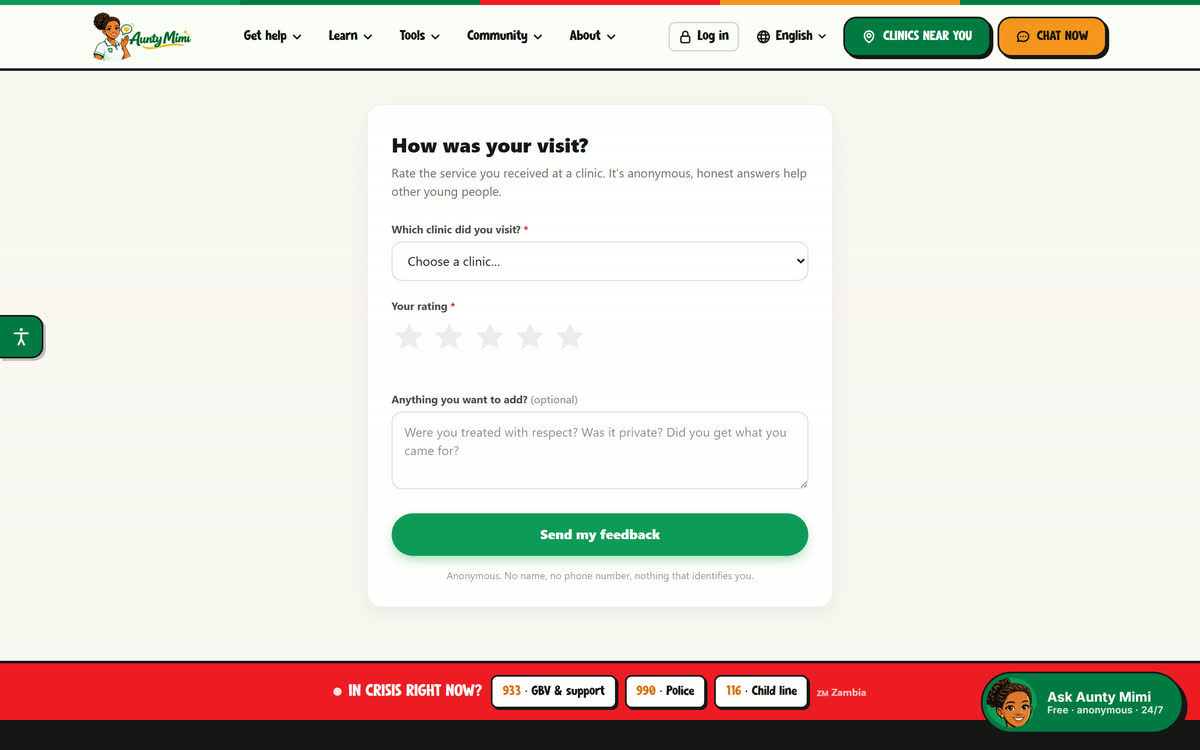
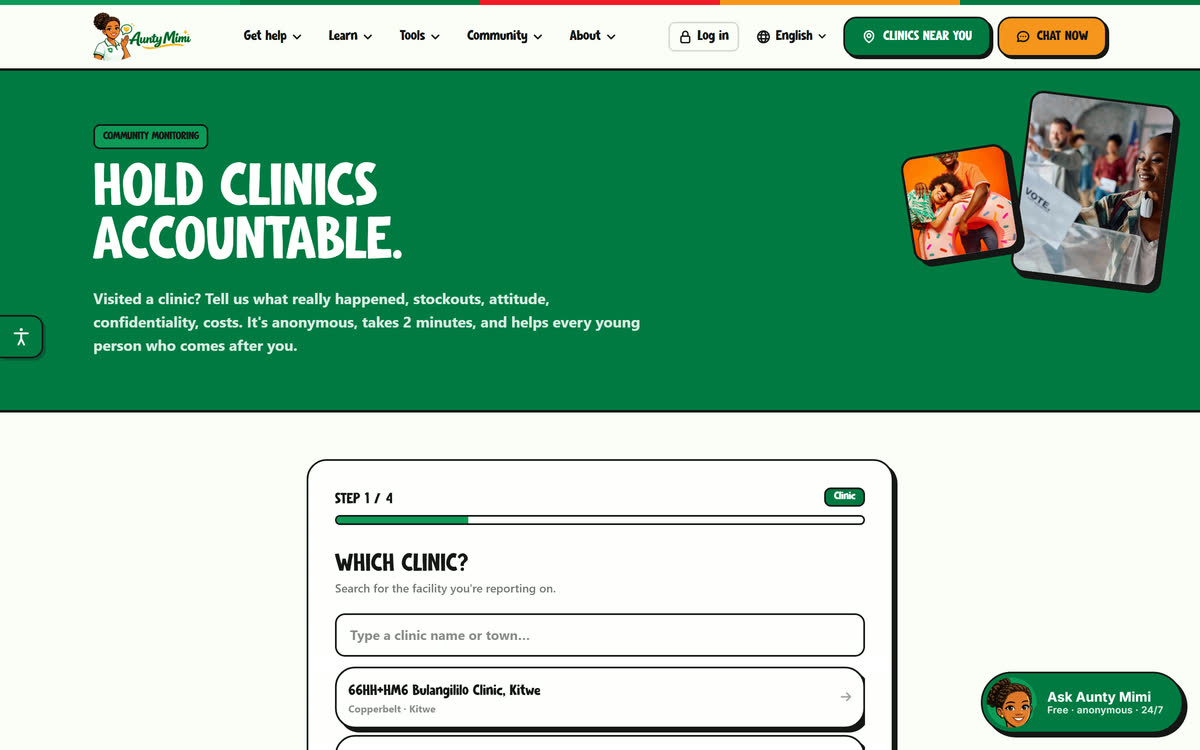
Every verified facility can be rated, anonymously, by the young person who walked in. Not a satisfaction survey run once a year by a consultant: a rating left the same day, by someone with nothing to gain from being polite.
Those ratings roll into provider scorecards. A clinic that turns adolescents away stops being a rumour among young people and becomes a number a programme manager has to answer for.
The people standing in front of the empty shelf know before the report does. Community-led monitoring turns that into data: short surveys any young person can fill in on a phone, logging what was missing, at which facility, on which day.
It is the same channel in both directions. She points a young person at a clinic, and the young person tells us what they found there.
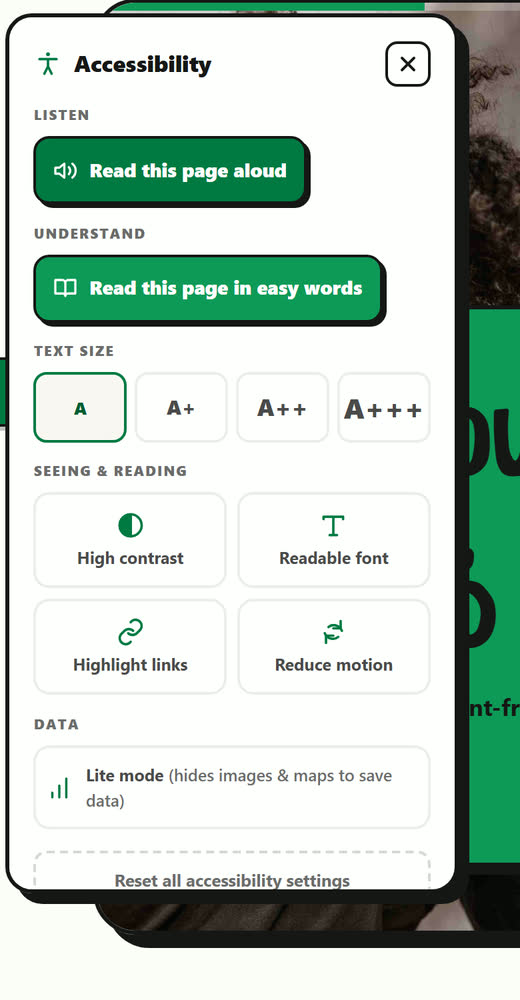
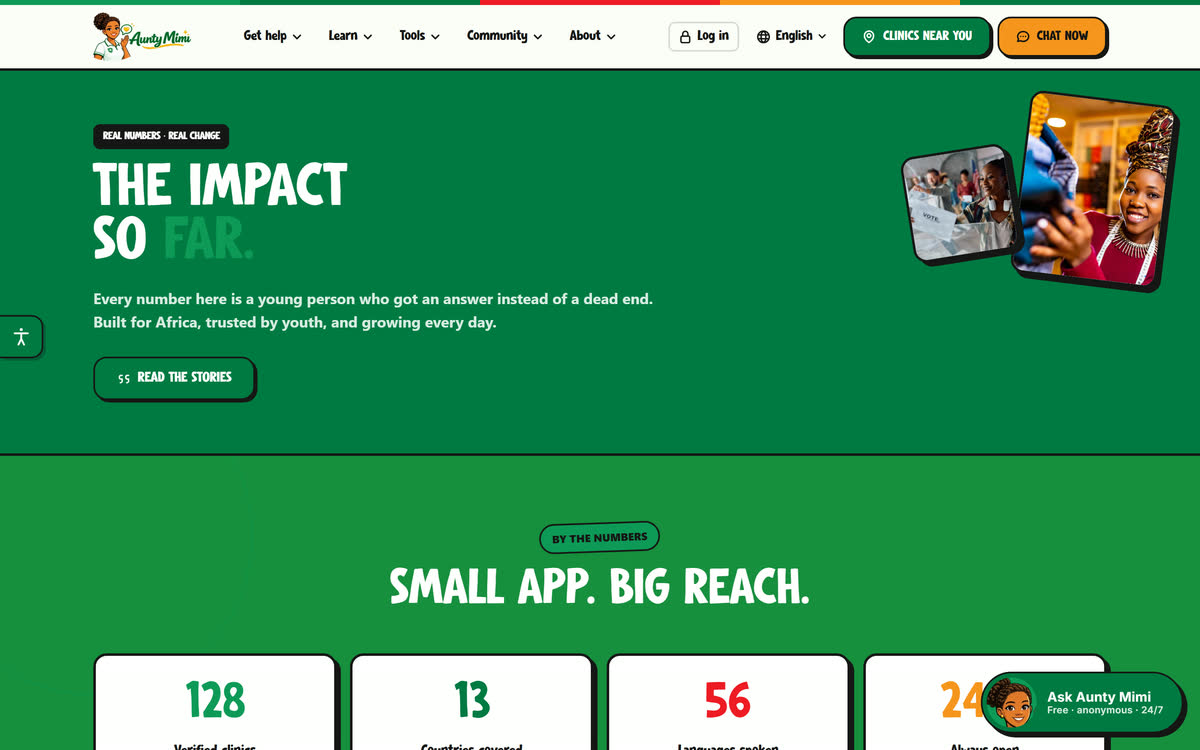
Fifty-six languages, including five Zambian languages that no machine translates and were translated by hand, string by string. Read aloud, four text sizes, high contrast, a dyslexia-friendly face, and a lite mode that drops the images, because the young person on the tightest budget is the one for whom a heavy page is a locked door.
A counselling service for adolescents fails on its edge cases, not on its ordinary ones. These four are enforced in the policy and checked by the regression suite.
A disclosure of coercion or assault drops everything else, states plainly that it is not their fault, gives the number to call now, and asks one question: are you safe.
Soreness or bleeding after consensual sex is treated as the health question it usually is. She asks once, and the answer decides which way she goes.
Never a diagnosis. She gives the best information she has, then names the person who can examine them.
No account, no name, no profile. There is no record for a parent, a partner or an authority to ask for.
Aunty Mimi is a product of The Youth Platform Three Sixty, Zambia's largest adolescent and youth network: 15,000 individual members and more than 200 affiliated institutions, with coordination offices in all ten provinces.
The network holds seats where adolescent health is decided, including the Global Fund Country Coordinating Mechanism, the National AIDS Council Board and the national adolescent health and family planning technical working groups. The engineering is by Pinch Africa.
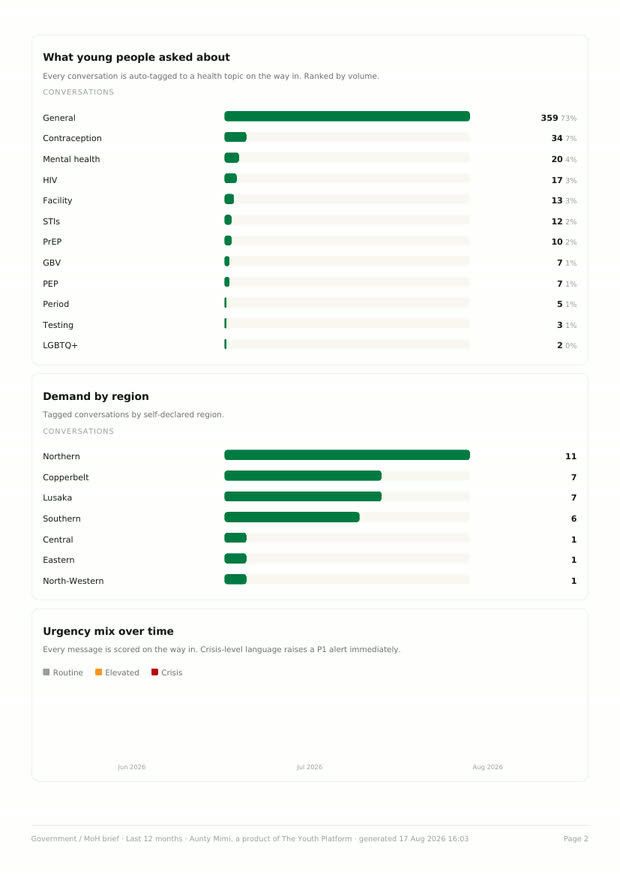
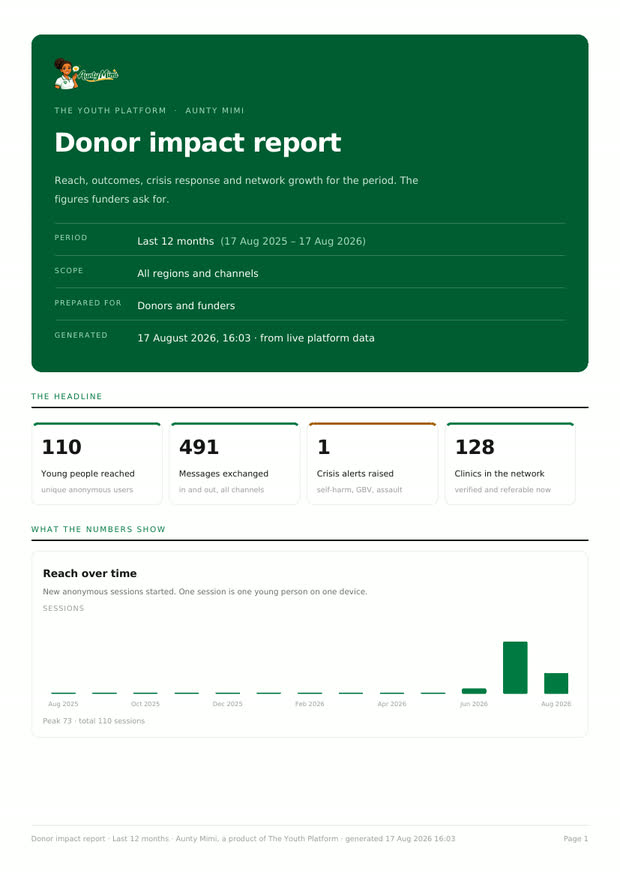
The service reports on itself. Demand by topic and by method, urgency, response time, languages served, facilities verified, accessibility attributes recorded, ratings left, stock-outs logged. Filtered by period, province and channel, exported as CSV or as a branded PDF.
That means an evaluator does not have to take our word for anything. The figures on these slides can be regenerated, with the date stamped on them.
What each method does to bleeding, in the first three months, in plain words and in every language. The gap where discontinuation happens.
The method a young person can use without returning to a facility, supported end to end: who can start it, where, and what to do at week thirteen.
Human verification, family planning method availability recorded per site, and the public map opened past the single country it serves today.
Youth ratings aggregated per facility and shared back with district teams, so that being unwelcoming to adolescents has a consequence.
Youth-reported commodity gaps, by facility and week, delivered to the people who can move stock rather than filed in a report.
Method knowledge, intention, uptake and continuation among users against a comparison group, designed with a research partner and published either way.
Every clinic in the network closes at five. The question does not. What we are asking to fund is the only part of the family planning system that is awake when a young person finally decides to ask, and that will still hand them a verified door in the morning.
Budget and country selection to be confirmed with the foundation
a product of
auntymimi.org · theyouthplatform.org · built with Pinch Africa